The Formation of the Moon
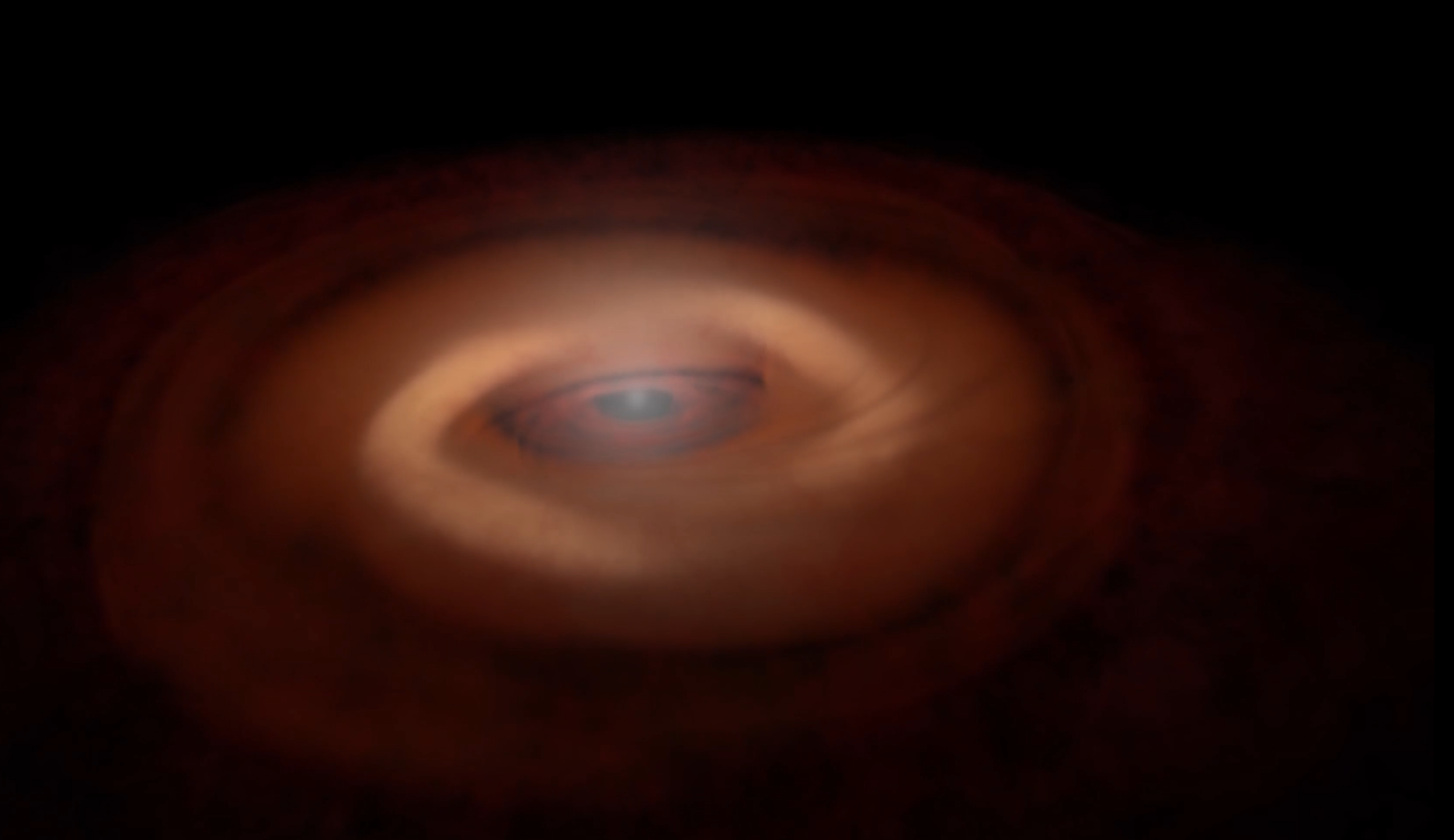
In the earliest stages of Earth’s existence, its orbit was far from empty. The Solar System was still cluttered with leftover material — not just dust and small fragments, but larger planetary embryos that had already taken shape. These bodies perturbed one another’s orbits through gravity, causing orbital changes over timescales of millions to hundreds of millions of years, during which collisions occasionally occurred. It was in this chaotic environment that Earth’s only natural satellite — the Moon — was born.
Early Earth’s Orbit and Lagrange Points
By this point, Earth had already undergone a long journey — from dust grain to planetesimal, from planetesimal to planetary embryo, and finally to a celestial body with significant gravitational influence. It orbited the Sun, continuously sweeping up debris along its path. Some of that material was absorbed into Earth; some was flung outward by gravity into more distant orbits. Gradually, Earth carved out a relatively clear orbital zone around itself.
But that zone was not Earth’s alone.
In a system dominated by the Sun’s gravity, there exist special positions where a smaller body can share Earth’s orbit without immediately colliding with it.
The most important of these are the so-called Lagrange points. 30 What are Lagrange points?
ESA (2023)
Lagrange points are five special positions in a two-body system — such as the Earth–Sun system — where gravitational and centrifugal effects balance. At these positions, a smaller body can exist in relative stability without being pulled directly toward either of the two dominant bodies. These positions are designated L1, L2, L3, L4, and L5.

Diagram of the Earth–Sun Lagrange points: The Sun is at the center of the image, Earth to the right. The Lagrange points are positioned relative to Earth and the Sun: L1 lies between Earth and the Sun, L2 on the opposite side of Earth from the Sun, and L3 on the far side of the Sun from Earth. L4 and L5 are located 60° ahead of and behind Earth along its orbit around the Sun.
29 Artist's impression of Lagrange points
ESA (2023)
.
L4 and L5 are especially significant. They lie approximately 60° ahead of and behind Earth along its orbit, forming an equilateral triangle with the Sun and Earth at its vertices — a configuration that creates a dynamically stable system. The other Lagrange points — L1, L2, and L3 — lie either between Earth and the Sun or on Earth’s opposite side, and are comparatively unstable; objects at those positions tend not to remain for long. At L4 and L5, the gravitational forces from the Sun and Earth combine with centrifugal effects to cancel out, making these locations relatively stable “gravitational rest points.” In the early Solar System, they acted as natural gathering zones where material could accumulate over long periods.
Because of these special regions, and the abundance of material in the early Solar System, conditions were ripe for another planetary embryo to take shape.
Another Planetary Embryo on the Same Orbit — Theia
Theia was a planetary embryo that once shared Earth’s orbit. Today it no longer exists as a separate body — after colliding with Earth and giving rise to the Moon, its material was entirely absorbed into both Earth and the Moon, becoming part of them both. But billions of years ago, it was a significant presence in Earth’s orbital neighborhood.
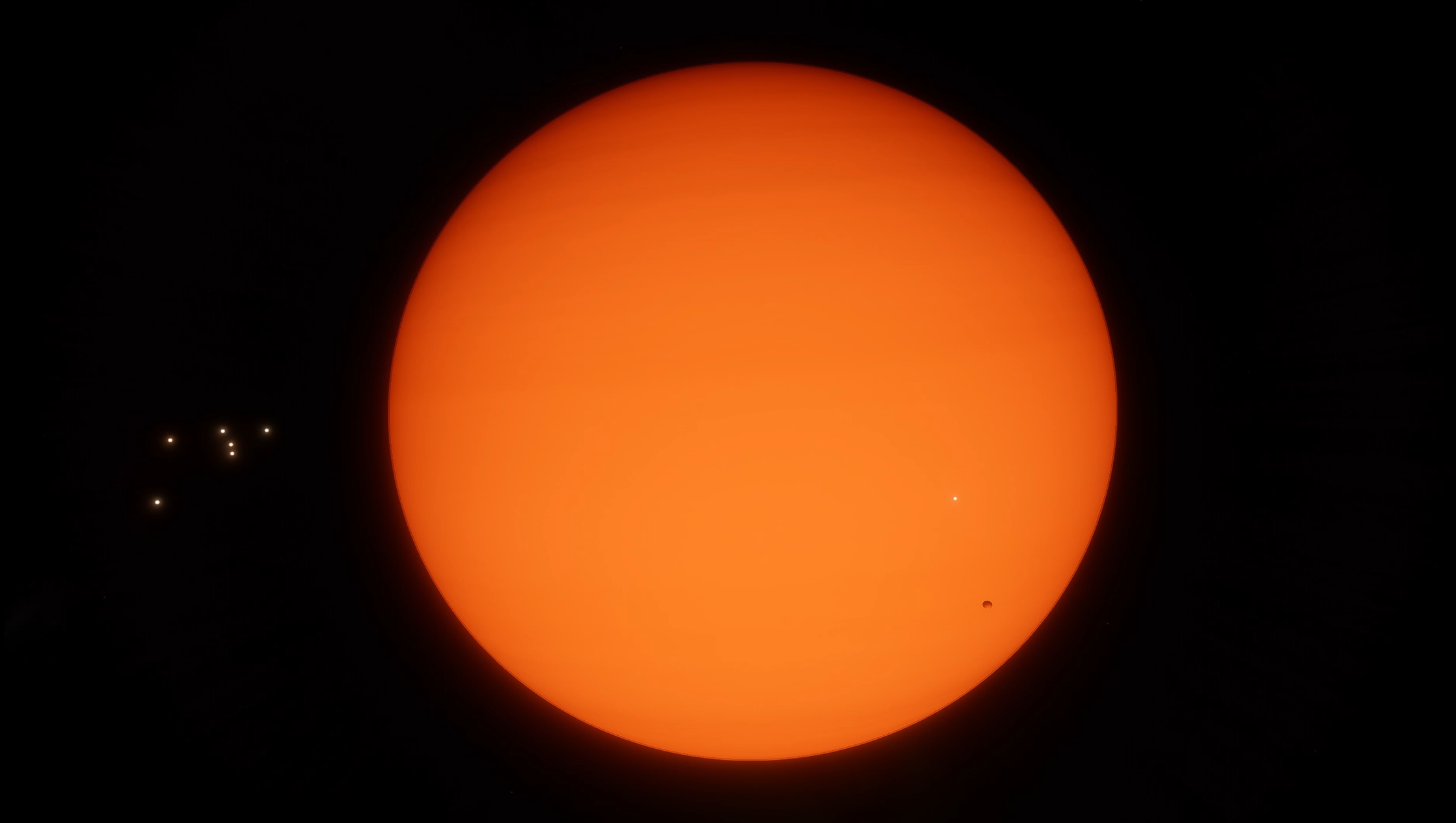
Like Earth, Theia formed from the gradual accumulation of dust. It was roughly the size of Mars. Its composition was similar to Earth’s — consisting primarily of rock and metal. It swept up and cleared material along the same orbital path as Earth. Theia may have originally formed near one of Earth’s Lagrange points — particularly L4 or L5 — positions that are relatively stable and well-suited for the formation and persistence of a planetary embryo.
The name Theia comes from Greek mythology: a Titan goddess and the mother of Helios (the Sun god), Selene (the Moon goddess), and Eos (the goddess of the Dawn). The name was chosen because of Theia’s role in giving rise to the Moon — much as the mythological Theia gave birth to Selene.
Orbital Instability
For a significant period of time, Earth and Theia coexisted on the same orbit — two planetary embryos sharing a path around the Sun simultaneously.
Under the right conditions, this kind of co-orbital motion could persist peacefully for tens of millions of years. 28 Possible origin of Theia, the Moon-forming impactor with Earth
Dvorak, R. and Loibnegger, B. and Maindl, T. I. (2017)
Astronomische Nachrichten
DOI: 10.1002/asna.201613209
But the gravitational perturbation of Jupiter — and possibly other planets, or the mutual gravitational pull between Earth and Theia themselves — gradually destabilized their orbits. 28 Possible origin of Theia, the Moon-forming impactor with Earth
Dvorak, R. and Loibnegger, B. and Maindl, T. I. (2017)
Astronomische Nachrichten
DOI: 10.1002/asna.201613209
As Theia drifted from its original stable position, it was no longer Earth’s quiet orbital companion.
It began entering a path that crossed Earth’s orbit.
From that moment on, a collision was no longer a possibility — only a matter of time.
The Giant Impact
Based on observations and simulations available today, the impact between Theia and Earth was not a head-on collision, but occurred at an oblique angle. Even so, it was fundamentally different from a grazing encounter — the kind in which two bodies pass close to each other without deep material exchange. This was a true collision: the material of both bodies mixed and exchanged violently.
They collided at a relative speed of approximately 10 kilometers per second. The energy released by such a collision can be estimated using the formula:
where is the mass of the impacting body and is the relative velocity. For a Mars-sized body, the mass is approximately one-tenth that of Earth, roughly kilograms. At 10 km/s, the energy released was approximately joules — hundreds of millions of times the energy of the asteroid impact that ended the age of the dinosaurs.
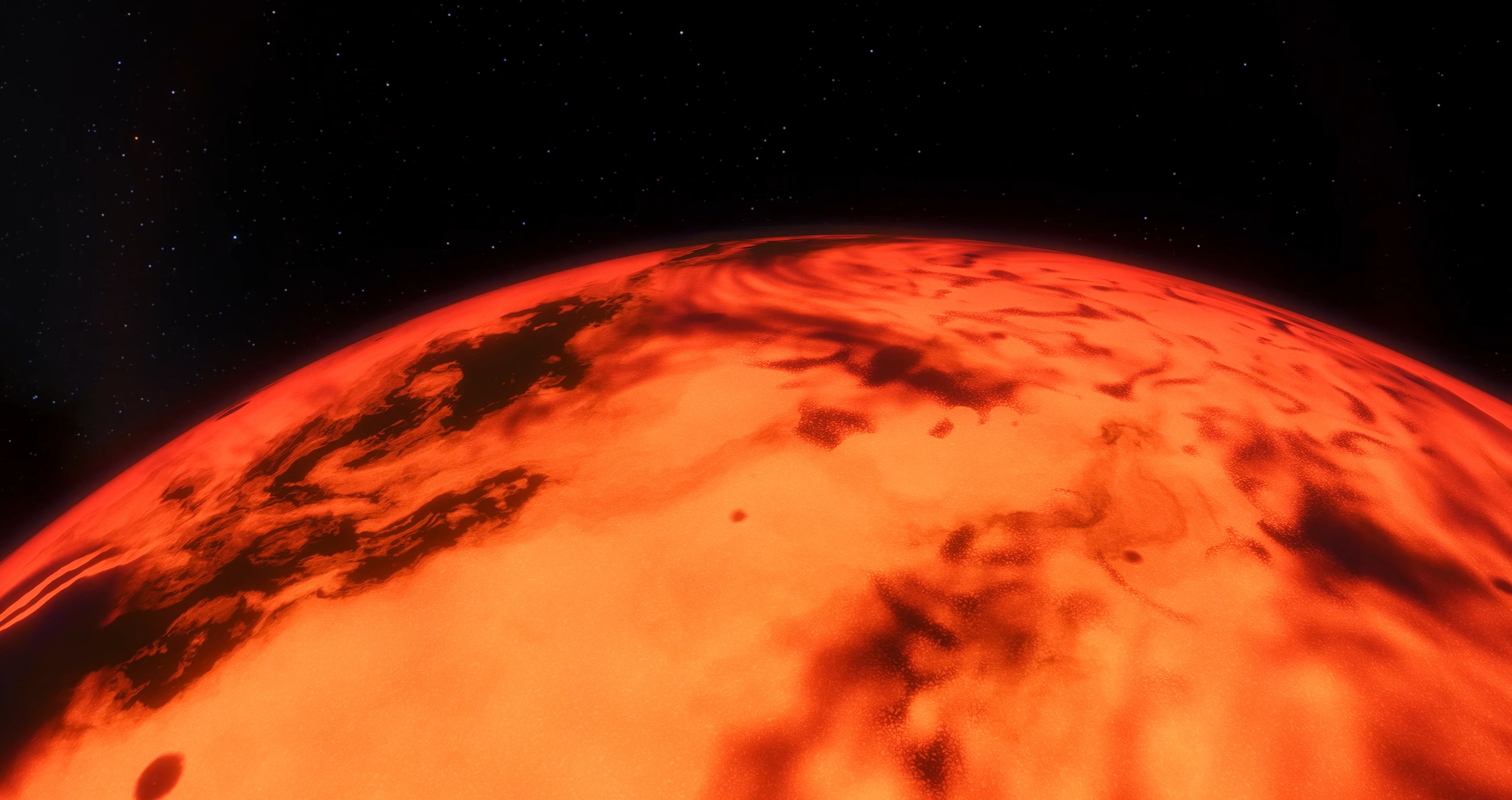
Under such enormous energy, solid rock could not hold its form. The outer layers of both Earth and Theia were instantly heated, melted, and vaporized. Earth’s layered internal structure was once again violently disrupted. This event very likely produced a global magma ocean across Earth’s surface.
At the same time, vast amounts of material were ejected into space. Some of it remained bound by Earth’s gravity, forming a disk of rocky and metallic debris in orbit around Earth.
Formation of the Moon
After the impact, the debris disk surrounding Earth did not remain in chaos forever. Under Earth’s gravitational control, the ejected material began to reorganize.
Much like Earth’s own formation, the Moon’s origin followed a path from dust to world.
The material in the debris disk began attracting one another, gradually clumping into larger masses.
Over time, these masses continued to collide and merge, and the Moon took shape.
This process may have been remarkably fast — possibly just thousands of years. 31 Lunar accretion from a Roche-interior fluid disk
Salmon, J., Canup, R. M. (2012)
The Astrophysical Journal
DOI: 10.1088/0004-637X/760/1/83
When the Moon first formed, it was far closer to Earth than it is today — approximately one-third of its current distance. 32 Simulations of a late lunar-forming impact
Canup, R. M. (2004)
Icarus
DOI: 10.1016/j.icarus.2003.09.028
Over time, the Moon has gradually moved away.
Today, laser ranging experiments can measure this drift with precision: the Moon is receding from Earth at a rate of approximately 3.8 centimeters per year. 33 Lunar Laser Raning: A Continuing Legacy of the Apollo Program
Dickey, J and Bender, P. L. and Faller, J. E. and Newhall, X. X. and Ricklefs, R. L. and Ries, J. G. and Shelus, P. J. and Veillet, C. and Whipple, A. L. and Wiant, J. R. (1994)
Science
DOI: 10.1126/science.265.5171.482
The Impact’s Effects on Earth
The collision transformed Earth profoundly. First, the energy: the impact delivered enough energy to completely melt Earth’s surface, creating a global magma ocean. Whatever crustal structure had formed before the impact was completely destroyed, and the evolution of Earth’s surface was effectively reset.
Earth’s rotation also changed. The impact imparted enormous angular momentum, causing the early Earth to spin far faster than it does today. A day may have lasted only a few hours; a year may have comprised more than a thousand of them. Over the billions of years that followed, the Moon’s gravitational influence gradually slowed Earth’s rotation, lengthening the day until it reached the familiar 24 hours we know today.
More significantly, the Moon’s presence helped stabilize Earth’s axial tilt. All celestial bodies rotate. Before the Theia impact, Earth was rotating too — but its axis of rotation may have been highly unstable, shifting direction continuously. After the Moon formed, its gravitational influence helped anchor Earth’s rotational axis at a relatively consistent angle.
When Earth’s axis stabilized, the patterns of change became regular. Sunlight no longer fell on the surface in chaotic and unpredictable ways — instead, it arrived in recurring cycles. This is the origin of the seasons. Each year, every region of Earth receives solar energy in a predictable, repeating pattern. This regularity is not stillness — it is a dynamic stability. And the ecosystems of Earth today depend entirely on it.
After the Rebirth
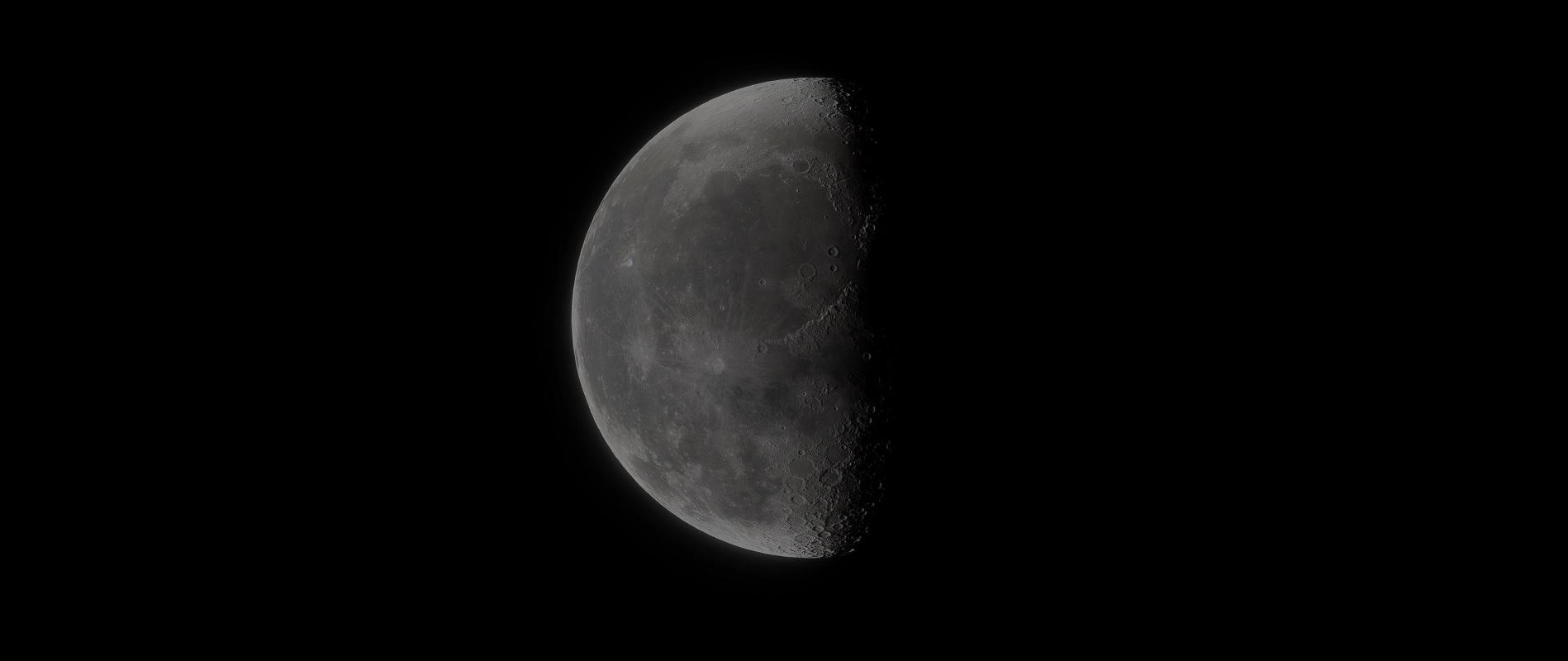
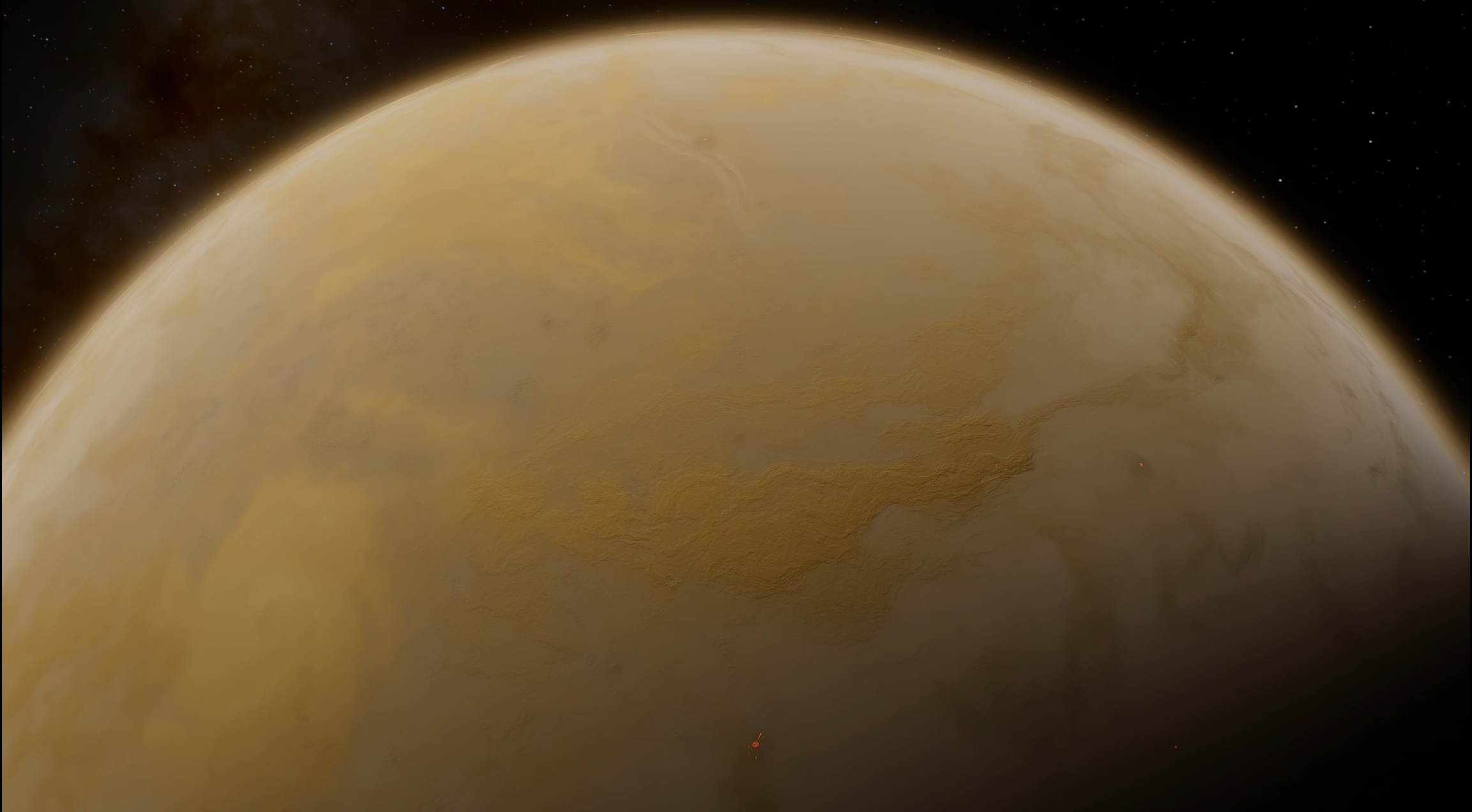
From microscopic specks of cosmic dust — to a blazing planet. From a catastrophic collision — to the formation of a stable Earth–Moon system. Earth had completed its transformation from chaos to order. The Moon’s gravity played a crucial stabilizing role in this journey: it steadied Earth’s rotation and helped establish the dynamic equilibrium that defines our world. The Moon orbits Earth, Earth’s only natural satellite and the nearest celestial body to our planet.
After the impact, Earth was still a sea of molten rock. No atmosphere had yet formed. No oceans had yet appeared. The processes that would truly shape Earth’s future had only just begun.
References
- Dvorak, R. and Loibnegger, B. and Maindl, T. I.(2017). Possible origin of Theia, the Moon-forming impactor with Earth. Astronomische Nachrichten
DOI: 10.1002/asna.201613209 - ESA(2023). Artist's impression of Lagrange points
Link - ESA(2023). What are Lagrange points?
Link - Salmon, J., Canup, R. M.(2012). Lunar accretion from a Roche-interior fluid disk. The Astrophysical Journal
DOI: 10.1088/0004-637X/760/1/83 - Canup, R. M.(2004). Simulations of a late lunar-forming impact. Icarus
DOI: 10.1016/j.icarus.2003.09.028 - Dickey, J and Bender, P. L. and Faller, J. E. and Newhall, X. X. and Ricklefs, R. L. and Ries, J. G. and Shelus, P. J. and Veillet, C. and Whipple, A. L. and Wiant, J. R.(1994). Lunar Laser Raning: A Continuing Legacy of the Apollo Program. Science
DOI: 10.1126/science.265.5171.482
Responses are welcome. Please keep comments thoughtful and relevant.