The Birth of Land: How Earth's First Crust Emerged from Fire
Keywords: Hadean crust, first land, magma ocean, Theia impact, proto-crust, Jack Hills zircon, Acasta Gneiss, fractional crystallisation, continental crust, silicate weathering, Venus surface, Mars crust
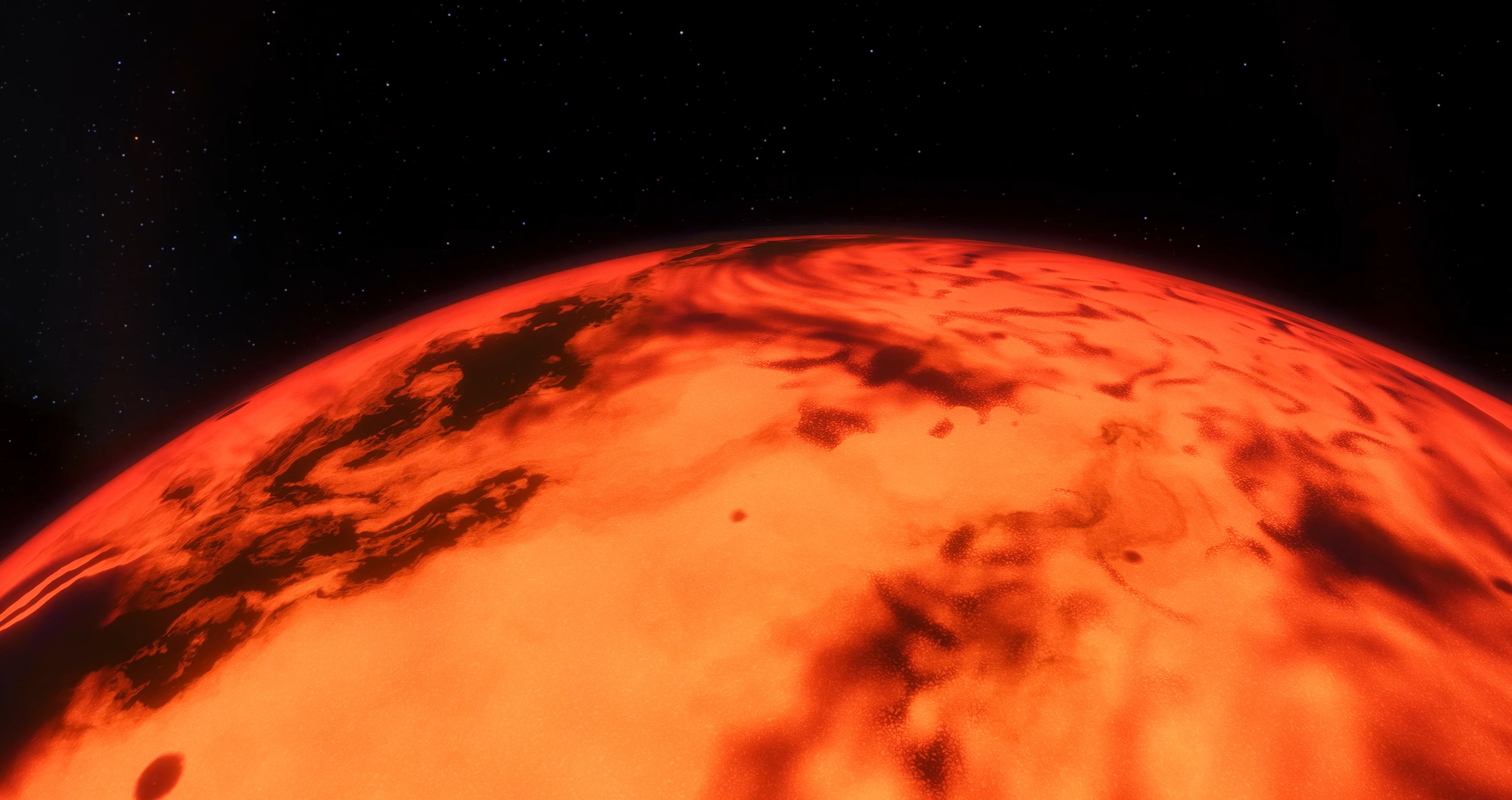
Look down at the ground beneath your feet. It feels permanent, immovable, ancient. And yet every rock, every continent, every mountain range traces its ultimate origin back to a moment when there was no solid ground at all. During the Hadean eon, 4.6 to 4.0 billion years ago, Earth was a world of fire and chaos: a planet-wide ocean of molten rock with no stable surface, no land, no shore. This is the story of how the first crust formed: from catastrophic impact, to slow cooling, to the emergence of the first thin islands of stone.
Before the Theia Impact: A Planet Without Solid Ground
At around 4.55 to 4.51 billion years ago, young Earth had already grown to nearly its present size through the relentless accretion of planetesimals and planetary embryos. But its surface bore no resemblance to anything we see today.
The planet was submerged beneath a global magma ocean: an unbroken, planet-wide sea of molten silicate rock hundreds of kilometres deep [Elkins-Tanton, 2012] Magma Oceans in the Inner Solar System
Elkins-Tanton, L. T. (2012)
Annual Review of Earth and Planetary Sciences
DOI: 10.1146/annurev-earth-042711-105503 .
Several processes conspired to produce and maintain this hellish state:
Impact energy: Every collision with infalling planetesimals released kinetic energy directly as heat. Large impacts melted the crust far faster than it could solidify.
Radioactive decay: The early Solar System was rich in short-lived radioactive isotopes such as ²⁶Al and ⁶⁰Fe, whose rapid decay generated enormous amounts of internal heat.
Gravitational compression: As Earth grew, its own weight compressed the interior, generating further heat through adiabatic compression.
Core formation: As iron sank to form the core, gravitational potential energy was released as heat, keeping the mantle near or above its melting point [Kleine et al., 2002] Rapid accretion and early core formation on asteroids and the terrestrial planets from Hf–W chronometry
Kleine, T., Münker, C., Mezger, K., Palme, H. (2002)
Nature
DOI: 10.1038/nature00982 .
Surface temperatures in this period likely exceeded 2,000 K. Any thin crust that momentarily solidified at the surface was immediately remelted: either by renewed impacts or by the upwelling heat from below.
The atmosphere above was not air as we know it, but a dense mixture of rock vapour, steam, and volatile gases [Zahnle et al., 2010] Earth's Earliest Atmospheres
Zahnle, K., Schaefer, L., Fegley, B. (2010)
Cold Spring Harbor Perspectives in Biology
DOI: 10.1101/cshperspect.a004895 .
There was, in the most literal sense, no ground to stand on.
The only surviving witnesses to this period are isolated zircon crystals, the microscopic mineral equivalent of black boxes.
The very oldest of these, from the Jack Hills of Western Australia, date to approximately 4.4 Ga and preserve chemical signatures suggesting that liquid water already existed at that time [Valley, 2014] Hadean age for a post-magma-ocean zircon confirmed by atom-probe tomography
Valley, J. W. et al. (2014)
Nature Geoscience
DOI: 10.1038/ngeo2075 .
But even the rock in which those zircons originally crystallised is long gone, remelted and recycled.
Only the crystals survived.
The Theia Impact: A Complete Reset
Then came the singular event that defined Earth’s history: the Theia impact.
Around 4.5 billion years ago, a roughly Mars-sized body (which planetary scientists call Theia) collided with the young Earth in a glancing blow [Dvorak et al., 2017] Possible origin of Theia, the Moon-forming impactor with Earth
Dvorak, R. and Loibnegger, B. and Maindl, T. I. (2017)
Astronomische Nachrichten
DOI: 10.1002/asna.201613209 .
The consequences were staggering.
The energy delivered was so vast that it vaporised the upper mantle entirely.
A disk of superheated vaporised rock and metal was flung into orbit around Earth, and from this disk the Moon coalesced within tens of thousands of years [Salmon et al., 2012] Lunar accretion from a Roche-interior fluid disk
Salmon, J., Canup, R. M. (2012)
The Astrophysical Journal
DOI: 10.1088/0004-637X/760/1/83 .
What was left behind on Earth was a planet that had been, to its core, thoroughly re-melted and scrambled. Whatever thin, unstable patches of proto-crust may have briefly existed before were annihilated. The molten silicate material from Theia mixed into Earth’s mantle. Theia’s iron-rich core sank through the magma and merged with Earth’s own core, enlarging it and altering the mantle’s overall composition.
In terms of surface history, the Theia impact was a hard reset. Earth’s clock for crust formation effectively started over.
How the Moon Changed the Ground
The Moon’s formation was not just a cosmic spectacle. It immediately and profoundly altered the conditions on Earth’s surface.
Tidal heating: In the immediate aftermath of the impact, the Moon was far closer to Earth than it is today, perhaps only 15 to 20 Earth radii away, compared to today’s 60 [Canup, 2004] Simulations of a late lunar-forming impact
Canup, R. M. (2004)
Icarus
DOI: 10.1016/j.icarus.2003.09.028 .
At this proximity, the Moon’s gravitational pull raised enormous tidal bulges in Earth’s still-molten interior.
The energy dissipated by the constant flexing of these tidal bulges added a substantial heat source, slowing the rate at which the magma ocean could cool.
The Moon, born from an impact, acted as a brake on its own host planet’s geological solidification.
Rapid rotation: The Theia impact also significantly spun up Earth’s rotation. The early post-impact Earth had a day of only approximately 6–8 hours.
This rapid spin drove vigorous convection in the magma ocean, keeping the surface in constant churning motion and preventing a stable crust from forming at any fixed location [Chambers, 2004] Planetary accretion in the inner Solar System
Chambers, J. E. (2004)
Earth and Planetary Science Letters
DOI: 10.1016/j.epsl.2004.04.031 .
Axial stability: The Moon’s gravitational influence helped stabilise Earth’s axial tilt at roughly 23.5°. Without it, Earth’s obliquity would oscillate chaotically over geologic timescales, creating severe climate swings incompatible with long-term surface stability.
Volatile depletion: The extreme temperatures of the Theia impact drove off large quantities of volatile elements. Zinc, potassium, and other moderately volatile substances are notably depleted in both the Moon and Earth’s post-impact mantle compared to primitive Solar System material. The post-impact Earth emerged as a more volatile-depleted, refractory-enriched body.
Taken together, these effects meant that post-impact Earth had to rebuild its surface from scratch under new rules: a partly tidally heated interior, a geochemically altered mantle, and a large Moon gradually receding into higher orbit [Dickey et al., 1994] Lunar Laser Raning: A Continuing Legacy of the Apollo Program
Dickey, J and Bender, P. L. and Faller, J. E. and Newhall, X. X. and Ricklefs, R. L. and Ries, J. G. and Shelus, P. J. and Veillet, C. and Whipple, A. L. and Wiant, J. R. (1994)
Science
DOI: 10.1126/science.265.5171.482 .
Cooling Down: The Magma Ocean Solidifies
With large impacts declining in frequency and the Moon receding (which reduced tidal heating), Earth’s surface finally began to cool in earnest. This solidification of the magma ocean is one of the most important yet poorly preserved events in planetary history.
Cooling was governed primarily by thermal radiation: Earth radiated heat to space from its glowing molten surface. As temperatures fell below the rock vaporisation point, mineral vapour condensed back into liquid. Then, as cooling progressed further, the silicate melt began to crystallise.
Fractional crystallisation is the key mechanism [Elkins-Tanton, 2012] Magma Oceans in the Inner Solar System
Elkins-Tanton, L. T. (2012)
Annual Review of Earth and Planetary Sciences
DOI: 10.1146/annurev-earth-042711-105503 .
As the magma cooled, different minerals crystallised at different temperatures:
Dense minerals first: Olivine and pyroxene (iron and magnesium silicates) crystallised early and sank toward the base of the magma ocean, being denser than the surrounding melt.
Light minerals later: Plagioclase feldspar and silica-rich phases crystallised at lower temperatures and, crucially, were less dense than the melt. They floated upward.
This physical sorting (dense minerals sinking, light minerals rising) is called gravitational settling, and we can read the same process written in stone on the Moon today. The lunar highlands are ancient anorthosite: a rock composed almost entirely of the plagioclase feldspar that floated to the top of the Moon’s magma ocean and froze there ~4.4–4.5 Ga. The Moon preserved that flotation crust perfectly, because it had no plate tectonics, no subduction, no way to recycle it. Earth did not preserve its equivalent, but the same process operated here.
On Earth, the result was a primitive proto-crust: a thin, buoyant layer of mafic and locally more silicic rock floating atop the crystallising magma ocean. This is the first solid ground Earth ever had.
The timing is constrained by the Jack Hills zircons.
Their oxygen isotope ratios (O values elevated to 5–7.5‰ relative to mantle values of ~5.3‰) indicate they crystallised from a melt that had incorporated liquid water from a surface hydrosphere [Valley, 2014] Hadean age for a post-magma-ocean zircon confirmed by atom-probe tomography
Valley, J. W. et al. (2014)
Nature Geoscience
DOI: 10.1038/ngeo2075 .
By ~4.4 Ga, Earth’s surface had cooled enough for both liquid water and at least some solid crust to coexist.
The Emergence of the First Land
The proto-crust was not uniformly solid. Think of it less like today’s continents and more like the crust of a cooling lava lake: thin, uneven, locally broken by upwellings from below, but overall floating as the first stable interface between rock and sky.
From this thin, uneven layer, the earliest “land” emerged: topographic highs that rose above the global water surface. These were not mountains. They were not continents. They were mafic islands: basalt- and komatiite-dominated slabs, perhaps a few hundred metres thick at most, perpetually vulnerable to remelting by major impacts or foundering back into the mantle.
The oldest intact rock we can hold in our hands today comes from northwest Canada: the Acasta Gneiss, radiometrically dated to approximately 4.02 Ga [Bowring et al., 1999] Priscoan (4.00–4.03 Ga) orthogneisses from northwestern Canada
Bowring, S. A., Williams, I. S. (1999)
Contributions to Mineralogy and Petrology
DOI: 10.1007/s004100050580 .
By the time the Acasta solidified, the first crust had already been forming, dissolving, and reforming for several hundred million years.
What the Acasta samples show is that by 4.0 Ga, a more evolved, gneissic (metamorphically processed) crust existed, evidence that the geological machinery for building and reworking crust was already well underway.
True continental crust (buoyant, silica-rich, granite-dominated rock that forms today’s continents) requires an additional step: the partial melting of mafic crust, typically driven by subduction [Taylor et al., 1995] The geochemical evolution of the continental crust
Taylor, S. R., McLennan, S. M. (1995)
Reviews of Geophysics
DOI: 10.1029/95RG00262 .
Water carried down with subducting oceanic crust lowers the melting point of the overlying mantle wedge, generating water-rich magmas that rise and crystallise into the tonalite–trondhjemite–granodiorite (TTG) suites that form Archean cratons.
This more complex crustal factory was beginning to operate in the late Hadean, but would become dominant through the Archean.
Why the First Land Matters: A Planetary Comparison
The emergence of solid land was not merely a geological milestone. It was a prerequisite for much of what came after.
The carbon-silicate cycle: When silicate rocks are exposed to water and CO₂ at the surface, they undergo chemical weathering:
This reaction permanently removes CO₂ from the atmosphere and locks it into carbonate rock.
Over geologic timescales, this silicate weathering feedback acts as Earth’s thermostat: warmer climate → faster weathering → less CO₂ → cooler climate, and vice versa [Walker et al., 1981] A negative feedback mechanism for the long-term stabilization of Earth's surface temperature
Walker, J. C. G., Hays, P. B., Kasting, J. F. (1981)
Journal of Geophysical Research: Oceans
DOI: 10.1029/JC086iC10p09776 .
The thermostat only functions if there is land exposed above sea level.
A completely ocean-covered world would have no exposed silicate rocks to weather, and the long-term carbon cycle would break down.
Hydrothermal environments and the origin of life: Land–ocean interfaces create the shallow warm pools, tidal zones, and coastal hydrothermal systems that are among the leading candidates for where life first emerged.
Nutrient supply: Minerals liberated by weathering carried by rivers into the ocean (phosphorus, iron, trace metals) would later prove essential for sustaining early ecosystems.
Now compare Earth with its planetary neighbours through this lens:
| Body | Crust type | Stable land? | Key reason |
|---|---|---|---|
| Earth | Bimodal: mafic ocean floors + granitic continents | Yes, ~30% of surface | Water + plate tectonics + sustained volcanism |
| Moon | Ancient anorthosite highlands + mare basalt | Yes (no water) | Froze early; no resurfacing or recycling |
| Mars | Ancient cratered highlands + younger volcanic plains | Yes (no liquid water today) | Small body; tectonics ceased ~4.0 Ga [Fassett et al., 2011] Sequence and timing of conditions on early Mars Fassett, C. I., Head, J. W. (2011) Icarus DOI: 10.1016/j.icarus.2011.05.014 |
| Venus | Entirely basaltic; globally resurfaced ~750 Ma ago | No granite continents | Water lost early; no plate tectonics; volcanic resurfacing [Strom et al., 1994] The global resurfacing of Venus Strom, R. G., Schaber, G. G., Dawson, D. D. (1994) Journal of Geophysical Research: Planets DOI: 10.1029/94JE01620 |
| Mercury | Ancient silicate crust; heavily cratered | Yes (no water) | Geologically dead since ~3.5 Ga |
Venus is the most arresting counterpart to Earth.
Nearly identical in size and bulk composition, it is often called Earth’s twin.
Yet Venus has no granitic continents, no stable plate tectonics, and no continental weathering cycle.
Its surface was volcanically resurfaced roughly 750 million years ago, erasing any record of older crust [Strom et al., 1994] The global resurfacing of Venus
Strom, R. G., Schaber, G. G., Dawson, D. D. (1994)
Journal of Geophysical Research: Planets
DOI: 10.1029/94JE01620 .
The most likely explanation is water loss.
Venus sits closer to the Sun, and early in Solar System history (possibly triggered by a runaway greenhouse) its surface water was lost to space.
Without liquid water, subduction and the production of continental crust operate differently or not at all.
Without continental weathering, the atmosphere filled with CO₂, creating the crushing 92-bar greenhouse inferno we observe today.
The chain of consequences traces back to a single missing ingredient: stable land and the water cycle that goes with it.
Mars took a different path entirely.
It formed early and cooled fast.
Its ancient southern highlands preserve some of the oldest terrain in the Solar System, dating to the Noachian period (~4.1 to 3.7 Ga) [Fassett et al., 2011] Sequence and timing of conditions on early Mars
Fassett, C. I., Head, J. W. (2011)
Icarus
DOI: 10.1016/j.icarus.2011.05.014 .
Evidence for ancient rivers, lake beds, and perhaps even an early northern ocean suggests Mars once had liquid water on its surface.
But without the sustained geological cycling that requires plate tectonics, the land that did emerge became a frozen, irradiated desert, stripped bare by solar wind after the core solidified and the magnetic field failed.
Earth stands apart. Its size meant it cooled slowly enough to sustain a liquid outer core and a durable magnetic field. Its water-rich interior enabled subduction and the progressive manufacture of buoyant granitic crust. The Moon’s influence stabilised its axial tilt, enabling reliable long-term climate. And it all began with that first thin, fragile layer of mafic crust, cooling and solidifying atop a global ocean of fire: Earth’s first skin.
References
- [Elkins-Tanton, 2012] Elkins-Tanton, L. T.(2012). Magma Oceans in the Inner Solar System. Annual Review of Earth and Planetary Sciences
DOI: 10.1146/annurev-earth-042711-105503 - [Kleine et al., 2002] Kleine, T., Münker, C., Mezger, K., Palme, H.(2002). Rapid accretion and early core formation on asteroids and the terrestrial planets from Hf–W chronometry. Nature
DOI: 10.1038/nature00982 - [Chambers, 2004] Chambers, J. E.(2004). Planetary accretion in the inner Solar System. Earth and Planetary Science Letters
DOI: 10.1016/j.epsl.2004.04.031 - [Zahnle et al., 2010] Zahnle, K., Schaefer, L., Fegley, B.(2010). Earth's Earliest Atmospheres. Cold Spring Harbor Perspectives in Biology
DOI: 10.1101/cshperspect.a004895 - [Dvorak et al., 2017] Dvorak, R. and Loibnegger, B. and Maindl, T. I.(2017). Possible origin of Theia, the Moon-forming impactor with Earth. Astronomische Nachrichten
DOI: 10.1002/asna.201613209 - [Salmon et al., 2012] Salmon, J., Canup, R. M.(2012). Lunar accretion from a Roche-interior fluid disk. The Astrophysical Journal
DOI: 10.1088/0004-637X/760/1/83 - [Canup, 2004] Canup, R. M.(2004). Simulations of a late lunar-forming impact. Icarus
DOI: 10.1016/j.icarus.2003.09.028 - [Dickey et al., 1994] Dickey, J and Bender, P. L. and Faller, J. E. and Newhall, X. X. and Ricklefs, R. L. and Ries, J. G. and Shelus, P. J. and Veillet, C. and Whipple, A. L. and Wiant, J. R.(1994). Lunar Laser Raning: A Continuing Legacy of the Apollo Program. Science
DOI: 10.1126/science.265.5171.482 - [Valley, 2014] Valley, J. W. et al.(2014). Hadean age for a post-magma-ocean zircon confirmed by atom-probe tomography. Nature Geoscience
DOI: 10.1038/ngeo2075 - [Bowring et al., 1999] Bowring, S. A., Williams, I. S.(1999). Priscoan (4.00–4.03 Ga) orthogneisses from northwestern Canada. Contributions to Mineralogy and Petrology
DOI: 10.1007/s004100050580 - [Taylor et al., 1995] Taylor, S. R., McLennan, S. M.(1995). The geochemical evolution of the continental crust. Reviews of Geophysics
DOI: 10.1029/95RG00262 - [Walker et al., 1981] Walker, J. C. G., Hays, P. B., Kasting, J. F.(1981). A negative feedback mechanism for the long-term stabilization of Earth's surface temperature. Journal of Geophysical Research: Oceans
DOI: 10.1029/JC086iC10p09776 - [Strom et al., 1994] Strom, R. G., Schaber, G. G., Dawson, D. D.(1994). The global resurfacing of Venus. Journal of Geophysical Research: Planets
DOI: 10.1029/94JE01620 - [Fassett et al., 2011] Fassett, C. I., Head, J. W.(2011). Sequence and timing of conditions on early Mars. Icarus
DOI: 10.1016/j.icarus.2011.05.014 - [Gomes et al., 2005] Gomes, R., Levison, H. F., Tsiganis, K., Morbidelli, A.(2005). Origin of the cataclysmic Late Heavy Bombardment period of the terrestrial planets. Nature
DOI: 10.1038/nature03676 - [Dalrymple, 2001] Dalrymple, G. B.(2001). The age of the Earth in the twentieth century. Geological Society of London Special Publications
DOI: 10.1144/GSL.SP.2001.190.01.14
Responses are welcome. Please keep comments thoughtful and relevant.