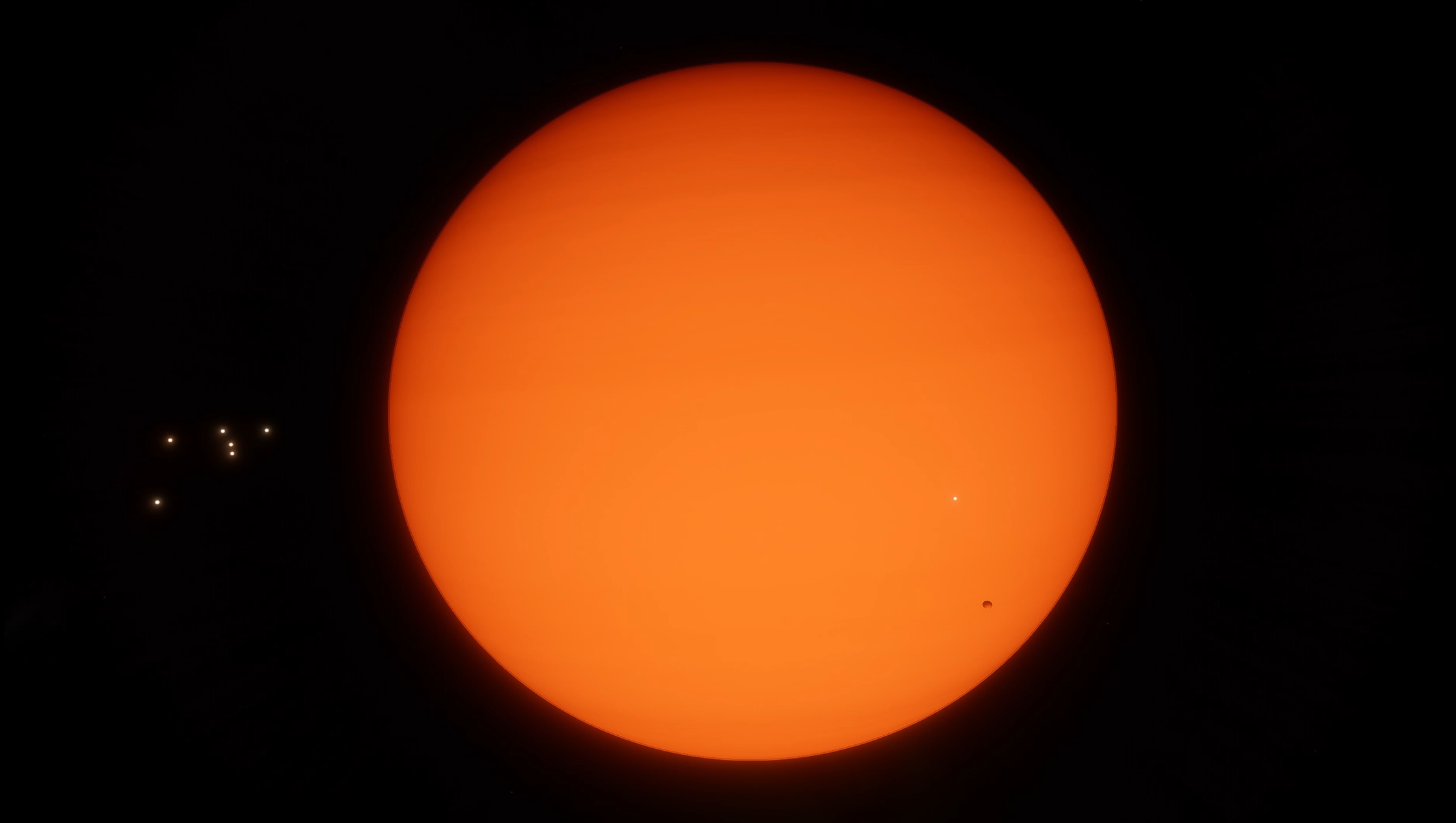
The Formation of the Planet
From Dust to Planet
Earth’s formation began 4.6 billion years ago 1 The age of the Earth in the twentieth century
Dalrymple, G. B. (2001)
Geological Society of London Special Publications
DOI: 10.1144/GSL.SP.2001.190.01.14 in the protoplanetary disk surrounding our young Sun 8 Protoplanetary disks and their evolution
Williams, J. P., Cieza, L. A. (2011)
Annual Review of Astronomy and Astrophysics
DOI: 10.1146/annurev-astro-081710-102548 . What started as microscopic dust grains would, through a series of violent collisions and gravitational interactions, become the planet we call home.
The Hadean eon—named after Hades, the Greek god of the underworld—represents Earth’s earliest and most tumultuous period, spanning from roughly 4.6 to 4.0 billion years ago. During this time, our planet transformed from a collection of planetesimals into a differentiated world with a metallic core and rocky mantle.
The Accretion Process
The first step in planet formation involved dust grains in the solar nebula sticking together through electrostatic forces and gentle collisions 9 The growth mechanisms of macroscopic bodies in protoplanetary disks
Blum, J., Wurm, G. (2008)
Annual Review of Astronomy and Astrophysics
DOI: 10.1146/annurev.astro.46.060407.145152 . These growing aggregates formed pebbles, then boulders, and eventually kilometer-sized bodies called planetesimals 10 The multifaceted planetesimal formation process
Johansen, A. et al. (2014)
Protostars and Planets VI. University of Arizona Press
DOI: 10.2458/azu_uapress_9780816531240-ch024 .
As planetesimals accumulated mass, their gravitational pull grew stronger. This allowed them to attract and capture more material in a runaway process. Within a few million years, these bodies had grown into Moon- to Mars-sized protoplanets 11 Formation of protoplanets from planetesimals
Kokubo, E., Ida, S. (2000)
Bioastronomy 99 .
The Giant Impact
Earth’s formation wasn’t peaceful. The early solar system was a chaotic shooting gallery where protoplanets frequently collided. The most dramatic of these impacts occurred when a Mars-sized body, often called Theia, struck the proto-Earth in a glancing blow.
This giant impact had profound consequences. It vaporized much of both bodies, creating a debris disk around Earth that would eventually coalesce into our Moon. The impact also added tremendous heat to the young planet, ensuring Earth remained molten for millions of years.
Differentiation and the Iron Core
The intense heat from accretion and radioactive decay melted the early Earth. In this molten state, heavier elements like iron and nickel sank toward the center through a process called differentiation. Lighter silicate minerals floated upward, forming the mantle and eventually the crust.
This iron catastrophe created Earth’s layered structure: a dense metallic core surrounded by a rocky mantle and thin crust. The core’s formation was crucial—it would later generate Earth’s protective magnetic field through convective motions of liquid iron.
A Hellish Surface
The Hadean Earth was truly a hostile world. Its surface was covered by a global magma ocean, heated by constant bombardment from leftover planetesimals and asteroids. The atmosphere, if it existed at all, was likely a thick blanket of water vapor, carbon dioxide, and other volatiles released from the molten rock.
Surface temperatures may have exceeded 1,200°C. No solid ground existed—just a roiling ocean of liquid rock glowing red-hot beneath a dark, cloud-choked sky. This was Earth’s original state: a molten sphere gradually cooling and solidifying in the hostile environment of the early solar system.
Yet even in this inferno, the seeds of habitability were being planted. Volatiles that would later form oceans were being delivered by comets and asteroids. The differentiation process was creating the layered structure that would enable plate tectonics. And slowly, inexorably, the surface was cooling.
Within a few hundred million years, Earth would transition from this hellish landscape to a world with solid crust, liquid water oceans, and possibly even the first stirrings of life. But that story belongs to the next chapter: the Archean eon.
References
- The age of the Earth in the twentieth century Dalrymple, G. B. (2001)
Geological Society of London Special Publications
DOI: 10.1144/GSL.SP.2001.190.01.14 - Protoplanetary disks and their evolution Williams, J. P., Cieza, L. A. (2011)
Annual Review of Astronomy and Astrophysics
DOI: 10.1146/annurev-astro-081710-102548 - The growth mechanisms of macroscopic bodies in protoplanetary disks Blum, J., Wurm, G. (2008)
Annual Review of Astronomy and Astrophysics
DOI: 10.1146/annurev.astro.46.060407.145152 - The multifaceted planetesimal formation process Johansen, A. et al. (2014)
Protostars and Planets VI. University of Arizona Press
DOI: 10.2458/azu_uapress_9780816531240-ch024 - Formation of protoplanets from planetesimals Kokubo, E., Ida, S. (2000)
Bioastronomy 99
Link
Responses are welcome. Please keep comments thoughtful and relevant.